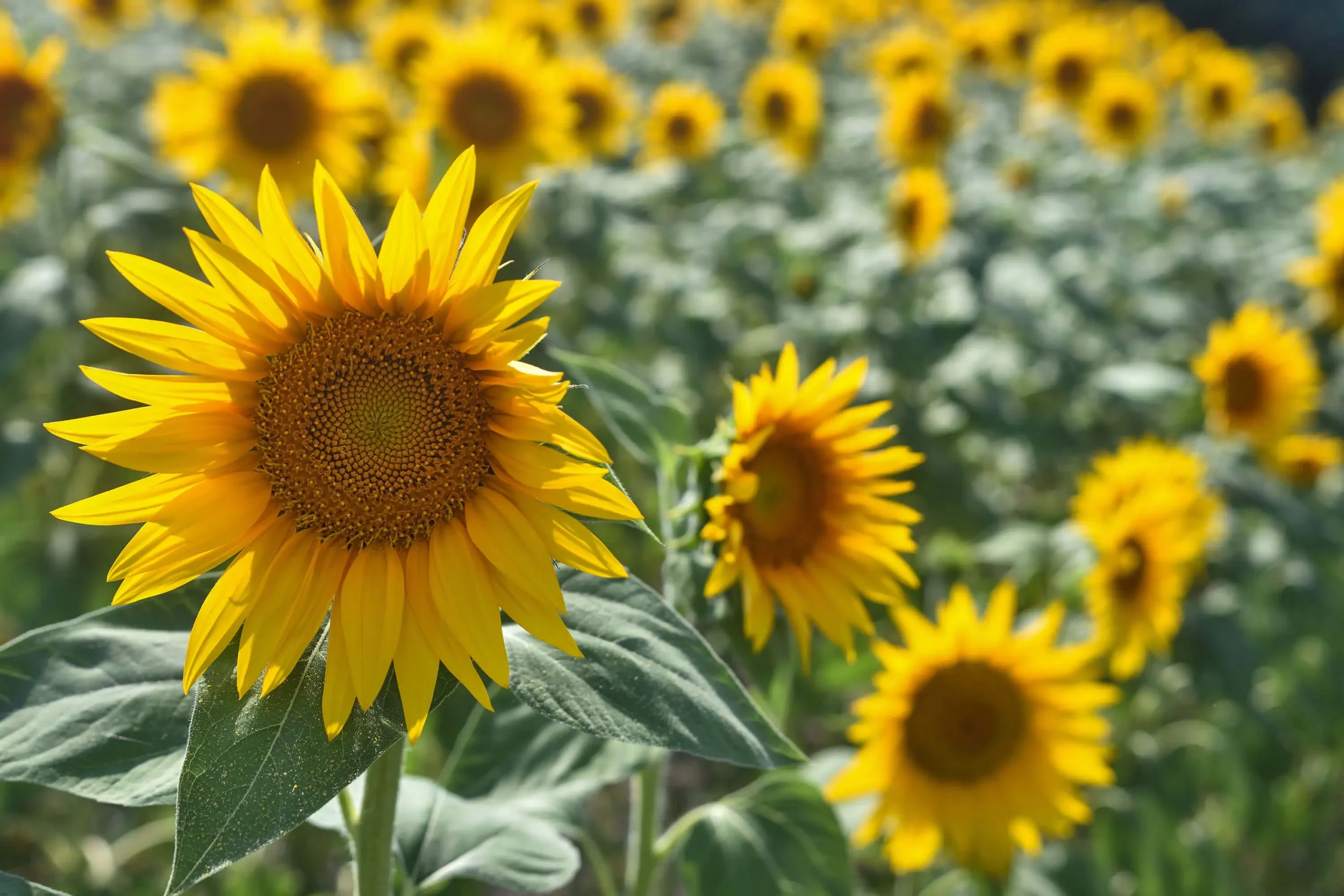
The sunflower is not only one of the most visually recognizable flowers in the world but also one of the most economically important agricultural crops because it combines ornamental beauty with industrial value, nutritional benefits, and environmental adaptability, and unlike many flowers that are cultivated mainly for decoration, sunflowers are grown on a massive global scale for oil production, livestock feed, snacks, biofuel research, and ecological farming systems, making them one of the most multifunctional plants in modern agriculture and agribusiness.
🌿 Botanical Structure and Agricultural Efficiency of Sunflower
The sunflower belongs to the genus Helianthus, and what appears to be a single giant flower is actually a composite structure made up of thousands of tiny florets arranged in spiral patterns that maximize seed production efficiency, and this mathematical arrangement allows the plant to produce a very high number of seeds within a compact area, while its thick stem and broad leaves support rapid photosynthesis and nutrient transport, making sunflower one of the most biologically optimized crops for large-scale farming and high-yield seed production.
🌞 Why Sunflowers Follow the Sun (Heliotropism Science)
One of the most fascinating features of young sunflower plants is heliotropism, where they follow the movement of the sun from east to west during the day, and this behavior is controlled by plant hormones called auxins that cause cells on one side of the stem to grow faster than the other side, resulting in bending toward sunlight, and this process maximizes photosynthesis and energy production during the early stages of growth, while mature sunflowers eventually stop moving and face east permanently because east-facing flowers warm up faster in the morning and attract more pollinators.
🌱 Sunflower Farming Process Step by Step
Sunflower farming begins with selecting high-quality seeds suitable for the climate and soil conditions, and farmers typically plant seeds in well-drained soil with full sunlight exposure because sunflowers require high light intensity for maximum growth, and after germination the plant rapidly develops deep roots and strong stems that allow it to survive drought conditions better than many crops, and during the flowering stage pollination becomes critical for seed formation, after which the flower heads mature and dry before harvesting, where seeds are collected either for oil extraction, snack production, or replanting purposes.
💰 Why Sunflower Farming Is Highly Profitable
Sunflower farming is considered profitable because the plant has multiple commercial uses and relatively low maintenance costs, and sunflower oil is one of the most consumed vegetable oils globally due to its healthy fat composition and vitamin E content, while sunflower seeds are sold as snacks, bird feed, and livestock feed, and additionally the plant itself can be used in silage production and biofuel research, meaning farmers can generate income from different parts of the crop rather than relying on a single product source.
🧠 Psychological and Marketing Power of Sunflowers
Sunflowers have strong psychological appeal because their bright yellow color is associated with positivity, happiness, warmth, and optimism, and this emotional connection makes them highly effective in branding, decoration, and social media marketing, where sunflower imagery is widely used in wellness products, lifestyle brands, cafes, and eco-friendly campaigns to create a sense of energy and emotional comfort, showing how flower psychology can directly influence consumer perception and branding success.
🌍 Cultural and Global Importance of Sunflowers
Sunflowers hold cultural significance in many countries and are often associated with hope, resilience, and vitality, while in art history they became globally famous through the paintings of Vincent van Gogh, who used sunflowers as symbols of emotional intensity and life energy, and in modern times sunflowers are also linked with environmental awareness and peace movements because of their connection with sunlight and natural growth, making them not only agricultural plants but also global cultural symbols.
🧪 Industrial and Commercial Uses of Sunflowers
Sunflowers are widely used in multiple industries because sunflower oil is one of the most important cooking oils in the global food market, while sunflower seeds are used in snack industries, health foods, and animal feed production, and beyond food, sunflower byproducts are used in cosmetics, skincare products, and renewable energy research, making sunflower one of the most commercially versatile crops in agriculture.
🐝 Ecological Role and Environmental Benefits
Sunflowers support ecosystems by attracting pollinators such as bees and butterflies, which are essential for biodiversity and crop pollination, and their deep root systems improve soil structure and reduce erosion, while certain sunflower species are also used in phytoremediation projects because they can absorb toxins and heavy metals from contaminated soil, making them environmentally valuable plants that contribute to ecosystem restoration and sustainability.
🌻 Conclusion
The sunflower is far more than just a decorative yellow flower because it represents a powerful combination of biological intelligence, agricultural efficiency, economic value, psychological influence, and ecological importance, and its ability to produce food, support pollinators, improve soil health, and inspire emotional positivity makes it one of the most impactful flowering plants in the world, connecting agriculture, science, business, and human emotion in a single natural system.
❓ FAQ
1. Why are sunflowers important in farming?
Because they produce oil, seeds, livestock feed, and industrial products.
2. What makes sunflower oil popular?
Its healthy fat profile and high vitamin E content.
3. Do all sunflowers follow the sun?
Young plants do, but mature flowers usually face east.
4. Are sunflowers good for the environment?
Yes, they support pollinators and improve soil quality.
5. Can sunflower farming be profitable?
Yes, due to multiple commercial uses and strong market demand.