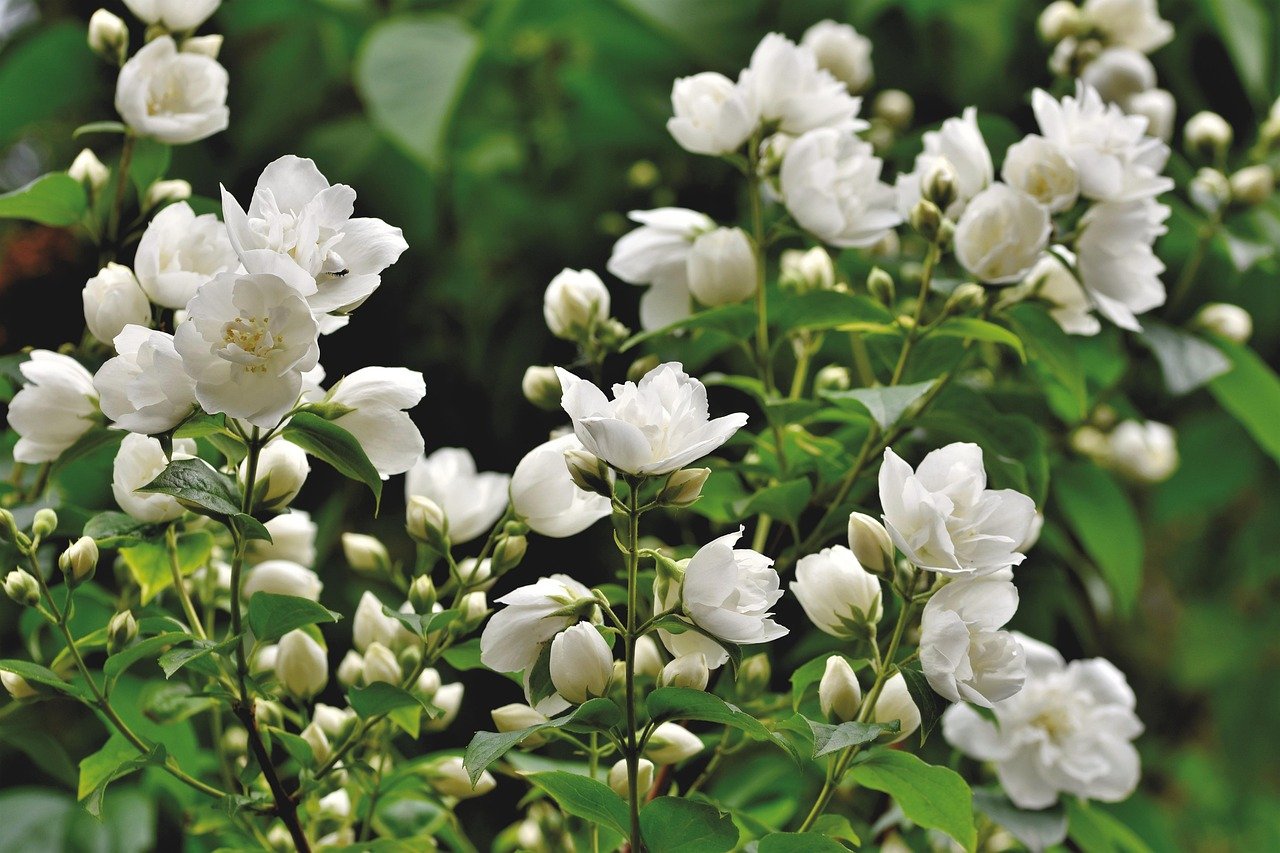
Jasmine is one of the most fragrant and emotionally influential flowers in the world because it combines delicate visual beauty with one of the strongest natural aromatic profiles found in plants, and unlike many flowers that rely mainly on bright colors to attract attention, jasmine depends heavily on its scent, which becomes especially powerful during the evening and nighttime hours, making it a flower deeply connected with human emotion, memory, romance, spirituality, and luxury perfume industries across multiple civilizations and cultures.
🌿 Botanical Structure and Natural Design of Jasmine
Jasmine belongs to the genus Jasminum, which includes hundreds of species of shrubs and climbing vines, and what makes jasmine biologically interesting is its thin, flexible stems, glossy green leaves, and small star-shaped flowers that produce extremely concentrated aromatic compounds, and unlike large ornamental flowers that use size for pollinator attraction, jasmine relies on chemical communication through fragrance molecules that travel through the air and attract insects from long distances, making it one of the most chemically specialized flowering plants in nature.
🌸 Why Jasmine Smells So Strong at Night
One of the most fascinating characteristics of jasmine is that many species release their strongest fragrance during the evening and nighttime hours, and this happens because jasmine evolved to attract nocturnal pollinators such as moths that are more active after sunset, and scientifically the flower increases the release of volatile organic compounds like benzyl acetate, indole, and linalool during cooler nighttime conditions, allowing the scent to travel more effectively through the air, and this evolutionary adaptation makes jasmine one of the best examples of how plants synchronize biological functions with pollinator behavior.
🧪 Chemistry of Jasmine Fragrance and Perfume Industry
The fragrance of jasmine is created by a highly complex chemical mixture containing hundreds of aromatic compounds, and among the most important are benzyl alcohol, jasmone, methyl jasmonate, and indole, which together create the rich, sweet, and slightly warm scent profile associated with jasmine perfumes, and because natural jasmine extraction requires enormous quantities of flowers to produce small amounts of oil, jasmine essential oil is considered one of the most luxurious and expensive ingredients in the global perfume industry, where it is used in premium fragrances and cosmetic products.
🌱 Life Cycle and Growth Pattern of Jasmine Plant
The life cycle of jasmine begins through seeds, cuttings, or layering methods, although commercial cultivation mostly uses vegetative propagation to maintain fragrance quality and plant consistency, and once established, jasmine plants develop climbing or bushy growth structures with continuous leaf production, and during blooming seasons they produce clusters of flowers that open gradually and release fragrance over time, while the plant itself thrives in warm climates with moderate moisture and sunlight, making it highly suitable for tropical and subtropical regions.
🧠 Psychological and Emotional Impact of Jasmine
Jasmine has one of the strongest psychological effects among flowers because its fragrance directly influences the human nervous system through the olfactory pathway, and studies suggest that jasmine aroma may reduce anxiety, improve mood, and create feelings of relaxation and emotional comfort, while in aromatherapy jasmine is often used to reduce stress and enhance emotional balance, and culturally the scent is strongly associated with romance, intimacy, and peace, making jasmine one of the most emotionally influential flowers in human sensory experience.
🌍 Cultural and Spiritual Importance of Jasmine
Jasmine holds deep cultural significance in many parts of Asia, the Middle East, and the Mediterranean region, where it is associated with love, purity, spirituality, and hospitality, and in countries like Pakistan and India jasmine garlands are commonly used in celebrations, weddings, and religious ceremonies, while in Middle Eastern cultures jasmine is associated with elegance and luxury, and in spiritual traditions the flower is often linked with inner peace and divine beauty, showing how jasmine has become deeply integrated into human emotional and cultural identity.
💰 Economic Importance of Jasmine in Global Markets
Jasmine is economically valuable because of its central role in perfume production, cosmetics, essential oils, teas, and decorative flower markets, and countries that cultivate jasmine commercially often export flowers and oils for international fragrance industries, while jasmine tea is also highly popular in Asian markets due to its calming aroma and cultural significance, making jasmine a major contributor to agricultural and luxury product economies.
🐝 Ecological Role of Jasmine in Nature
Jasmine contributes to ecological systems by attracting pollinators such as moths, bees, and butterflies through its strong fragrance and nectar production, and its climbing growth habit also provides shelter for insects and small organisms, while continuous flowering cycles help maintain pollinator food sources during active seasons, supporting biodiversity and ecological stability in natural environments.
🌺 Conclusion
Jasmine is far more than a small fragrant flower because it represents a highly advanced natural system where chemistry, psychology, biology, and culture interact together, and its ability to influence human emotions, support perfume industries, attract pollinators, and symbolize romance and spirituality makes it one of the most important and emotionally powerful flowers in the world, proving that even delicate flowers can have enormous scientific, economic, and cultural significance.
❓ FAQ
1. Why does jasmine smell stronger at night?
Because it evolved to attract nighttime pollinators like moths.
2. Is jasmine used in perfumes?
Yes, jasmine oil is one of the most valuable perfume ingredients.
3. What does jasmine symbolize?
It symbolizes love, purity, peace, and elegance.
4. Can jasmine reduce stress?
Its aroma is commonly used in aromatherapy for relaxation.
5. Is jasmine difficult to grow?
No, it grows well in warm climates with proper sunlight and moisture.