+
The Anemone Flower is one of the most delicate and emotionally symbolic flowers in the world. Known for its silky petals, dark dramatic center, and graceful movement in the wind, anemones symbolize protection, anticipation, remembrance, emotional fragility, and the fleeting beauty of life. Their mysterious appearance and deep cultural history have fascinated artists, poets, spiritual traditions, and flower lovers for centuries.
Unlike heavily layered flowers, anemones possess a simple yet striking elegance. Their contrast between soft petals and dark centers creates an emotional intensity that feels both graceful and dramatic. Today, anemones are admired in luxury floral design, fine art, modern weddings, and symbolic gardens around the world.
In this complete deep guide, we explore the history, symbolism, biology, psychology, spiritual meaning, cultural significance, and global fascination surrounding the Anemone Flower.
What Is the Anemone Flower?
The Anemone Flower belongs to the genus Anemone, a group of flowering plants in the buttercup family.
Anemones are famous for:
- Silky delicate petals
- Dark contrasting centers
- Wind-sensitive blooms
- Elegant minimalist beauty
- Wide seasonal variety
These flowers bloom in shades of:
- Red
- White
- Purple
- Blue
- Pink
- Violet
Their lightweight petals move easily with the wind, giving them an almost floating appearance.
The name “Anemone” comes from the Greek word for “wind,” which is why they are often called “Windflowers.”
Ancient History of Anemones
Anemones have deep roots in mythology and ancient symbolism.
Anemones in Greek Mythology
According to Greek mythology, the anemone flower was created from the tears of Aphrodite after the death of Adonis.
This myth connected anemones with:
- Love
- Grief
- Fragility of life
- Emotional beauty
Because of this legendary origin, anemones became symbols of both romance and sorrow.
Anemones in Ancient Mediterranean Cultures
Ancient cultures admired anemones for their bright colors and seasonal blooming.
They were associated with:
- Renewal
- Nature’s cycles
- Emotional transformation
- Temporary beauty
In some traditions, anemones symbolized protection against evil and misfortune.
Anemone Flower Symbolism
The Anemone Flower carries rich emotional and spiritual meanings.
Fragility and Temporary Beauty
Because anemone petals are delicate and short-lived, they symbolize:
- Fleeting moments
- Temporary beauty
- Appreciation of life
- Emotional sensitivity
Their blooming cycle reminds people to value the present moment.
Protection and Hope
Ancient traditions believed anemones could provide protection from negativity and bad luck.
They became symbols of:
- Safety
- Emotional healing
- Optimism
- Renewal after hardship
Anticipation and New Beginnings
Anemones often bloom at the transition between seasons.
This seasonal timing connects them with:
- Hope
- Fresh opportunities
- Emotional awakening
- Future possibilities
Fascinating Biology of Anemones
Anemones are scientifically fascinating flowers with unique natural adaptations.
Wind-Responsive Blooms
Anemones are highly sensitive to environmental movement and light.
Their petals react gracefully to:
- Wind currents
- Sunlight
- Temperature changes
This creates their signature floating appearance.
Dark Central Structure
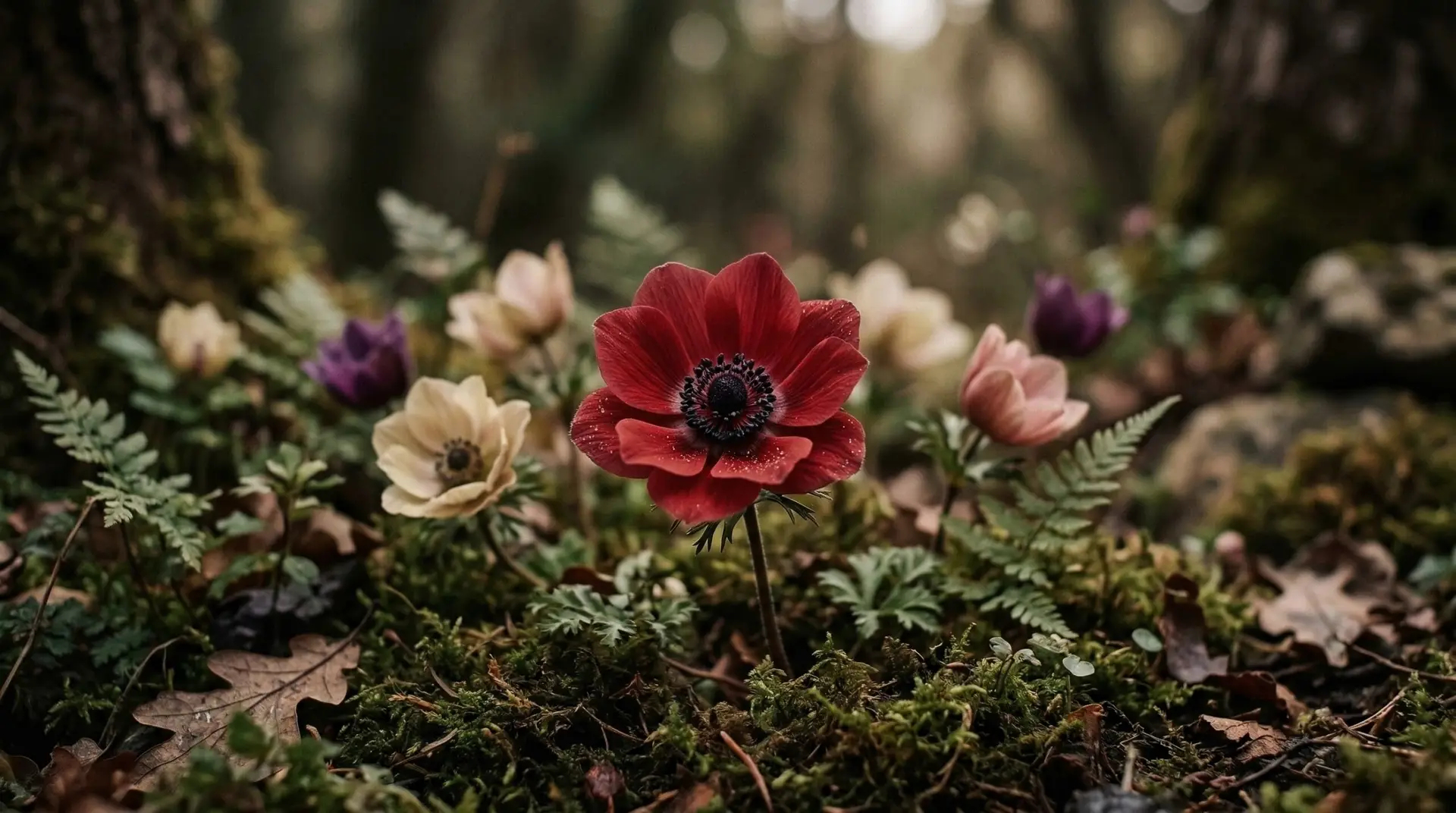
One of the most recognizable features of anemones is their dark central disk surrounded by vibrant petals.
This contrast helps attract pollinators such as:
- Bees
- Butterflies
- Hoverflies
The dark center creates dramatic visual depth rarely found in flowers.
Seasonal Adaptability
Different anemone species bloom during:
- Spring
- Summer
- Autumn
This wide seasonal diversity allows anemones to thrive across different climates and landscapes.
Anemone Colors and Their Meanings
Different anemone colors carry different symbolic meanings.
Red anemones symbolize love, passion, sacrifice, and emotional intensity.
White anemones represent purity, honesty, peace, and spiritual clarity.
Purple anemones symbolize mystery, imagination, elegance, and emotional depth.
Blue anemones represent calmness, trust, serenity, and emotional healing.
Pink anemones symbolize tenderness, affection, and gentle romance.
Because of their vivid colors and dark centers, anemones create both softness and dramatic beauty.
Anemone Psychology and Human Attraction
Anemones create strong emotional responses because of their visual contrast and graceful simplicity.
Emotional Depth
The combination of delicate petals and dark centers naturally creates feelings of:
- Curiosity
- Reflection
- Emotional connection
- Quiet intensity
Their appearance feels emotionally expressive without being overwhelming.
Minimalist Beauty
Unlike highly layered flowers, anemones create elegance through simplicity.
Modern psychology often associates minimalist natural forms with:
- Mental clarity
- Emotional calmness
- Sophisticated beauty
- Peaceful environments
This explains why anemones are highly valued in modern floral design.
Anemones in Art and Literature
Anemones have inspired:
- Classical paintings
- Romantic poetry
- Botanical illustrations
- Luxury photography
- Modern floral art
Artists often use anemones to symbolize:
- Beauty mixed with sadness
- Emotional vulnerability
- Romantic longing
- Nature’s temporary perfection
Their dramatic appearance makes them visually unforgettable.
Spiritual Meaning of Anemones
Anemones hold spiritual symbolism connected with emotional healing and awareness.
They often represent:
- Spiritual protection
- Letting go of the past
- Emotional renewal
- Acceptance of change
- Inner peace
Because they bloom delicately yet confidently, anemones symbolize strength within softness.
Their movement with the wind also symbolizes flexibility and emotional flow.
Anemones in Modern Floral Design
Anemones are highly popular in luxury floral aesthetics because they provide:
- Strong visual contrast
- Elegant simplicity
- Modern sophistication
- Romantic energy
They are commonly used in:
- Weddings
- Luxury bouquets
- Editorial floral design
- Contemporary interiors
White anemones with black centers are especially famous in modern wedding culture.
Economic Importance of Anemones
Anemones contribute significantly to:
- Floral industries
- Ornamental horticulture
- Luxury event decoration
- Flower export markets
Their striking appearance makes them highly valuable in premium floral arrangements.
Global demand for anemones continues increasing in modern luxury floral design.
Basic Anemone Care
Anemones thrive best in cool to moderate climates.
Most anemones require:
- Partial or full sunlight
- Well-drained soil
- Moderate watering
- Cool growing conditions
With proper care, they produce elegant blooms during seasonal flowering periods.
Why Anemones Continue to Fascinate Humanity
The Anemone Flower represents emotional beauty, fragility, mystery, and graceful strength in a way few flowers can achieve.
From ancient mythology to modern luxury bouquets, anemones continue to symbolize the emotional complexity of beauty and life itself.
Their delicate petals, dramatic centers, and spiritual symbolism ensure that anemones remain among the most captivating flowers in the world.