The tulip is one of the most historically influential flowers in the world because it transformed from a simple ornamental plant into the center of one of the earliest recorded economic bubbles in human history, known as Tulip Mania, and unlike many flowers that are remembered mainly for beauty or fragrance, tulips became symbols of wealth, luxury, trade, and social status during the 17th century in the Netherlands, making them not only botanically important but also economically and culturally legendary in global history.
🌿 Botanical Structure and Scientific Design of Tulips
Tulips belong to the genus Tulipa and are perennial bulbous plants adapted to regions with cold winters and warm springs, and what makes their structure biologically efficient is their underground bulb system, which stores nutrients and energy during dormant periods and allows rapid flowering when environmental conditions become favorable, while the flower itself usually consists of six smooth petals arranged symmetrically around reproductive organs, creating the clean and elegant shape that makes tulips instantly recognizable and visually appealing.
🌸 Why Tulips Have Such Smooth and Vibrant Colors
The striking colors of tulips come from pigment compounds such as anthocyanins and carotenoids, which produce red, purple, pink, yellow, and orange tones, and historically some of the most unusual striped tulips were actually caused by a plant virus called the Tulip Breaking Virus, which disrupted pigment distribution and created flame-like patterns on petals, and although infected flowers were biologically weaker, these rare patterns became highly desired during Tulip Mania because they appeared exotic and luxurious compared to ordinary tulips.
🌱 Life Cycle and Seasonal Growth of Tulips
The life cycle of tulips begins with bulb planting during autumn, where the bulbs remain underground through winter dormancy while storing energy and preparing for spring growth, and as temperatures rise in early spring roots expand, shoots emerge, and flower buds develop rapidly, leading to blooming during cooler months before summer heat arrives, and after flowering the leaves continue photosynthesis to recharge the bulb for the next season, after which the above-ground parts die back and the bulb returns to dormancy, repeating the cycle annually.
💰 Tulip Mania: The World’s First Economic Bubble
One of the most fascinating parts of tulip history is Tulip Mania, which occurred in the Netherlands during the 1630s when tulips became luxury status symbols and their prices increased to extraordinary levels, and rare bulbs were traded like financial assets with some reportedly valued higher than houses or land, while speculation and social hype drove prices upward until the market eventually collapsed, making Tulip Mania one of the earliest recorded examples of speculative economic bubbles and a famous historical lesson about market psychology, greed, and financial instability.
🧠 Psychological and Emotional Impact of Tulips
Tulips create feelings of freshness, simplicity, optimism, and elegance because of their clean structure and vibrant colors, and in color psychology red tulips symbolize romantic love, yellow tulips represent happiness and positivity, purple tulips symbolize royalty and luxury, and white tulips represent peace and forgiveness, making tulips emotionally versatile flowers widely used in celebrations, gifts, and decorative arrangements that communicate clear emotional messages.
🌍 Cultural and Global Importance of Tulips
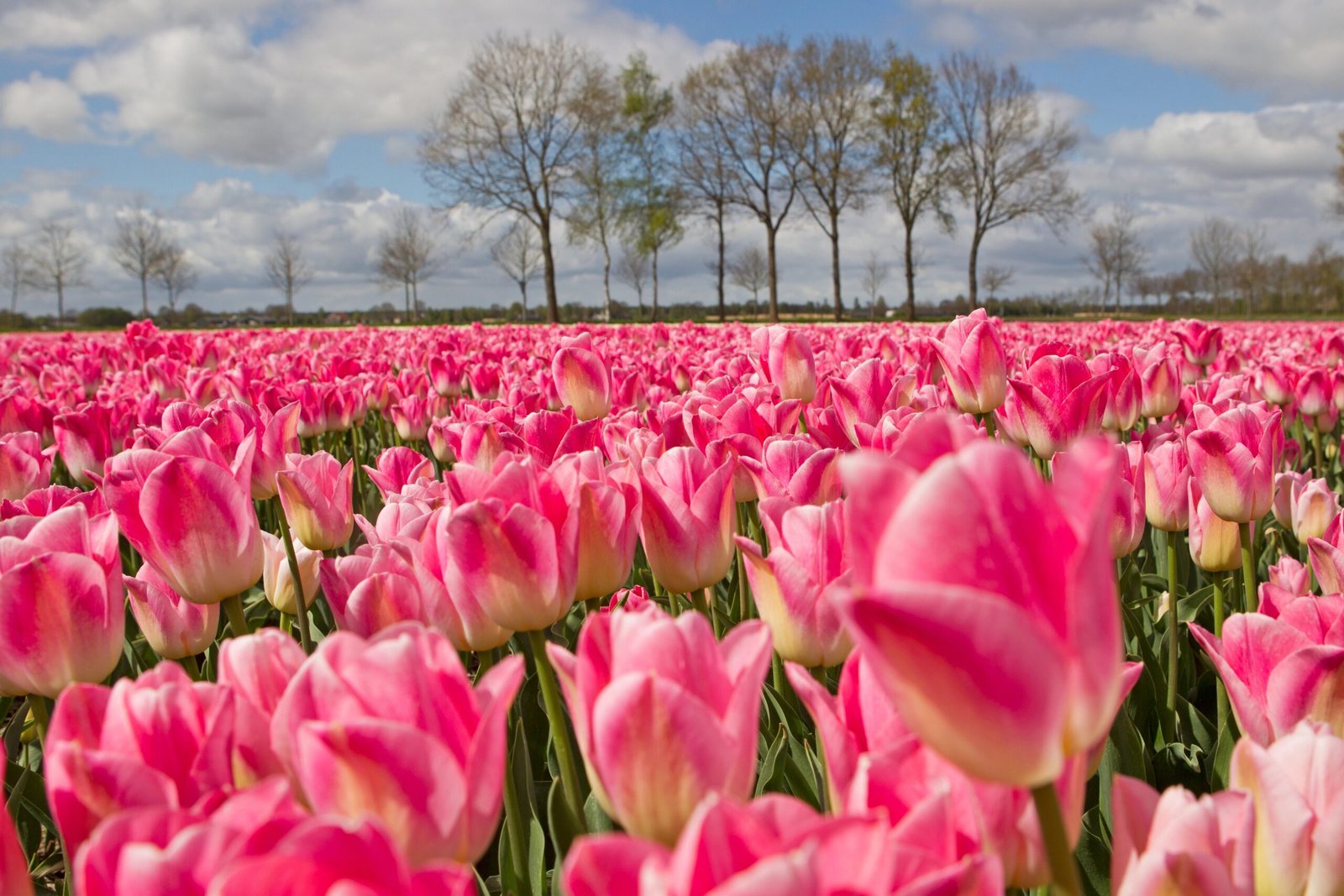
Although tulips are strongly associated with the Netherlands today, they originally came from Central Asia and later became highly valued in the Ottoman Empire before spreading into Europe, and in Turkish culture tulips symbolized paradise and spiritual beauty, while in Dutch culture they became national icons representing horticultural excellence and economic history, and today tulip festivals attract millions of tourists worldwide, especially in the Netherlands where massive tulip fields have become symbols of beauty and agricultural success.
🧪 Commercial and Agricultural Importance of Tulips
Tulips are commercially important in the global flower industry because millions of bulbs are cultivated and exported every year for landscaping, floral arrangements, and ornamental gardening, while tulip tourism also generates major economic value through flower festivals, garden parks, and international flower markets, making tulips economically significant far beyond their decorative role.
🐝 Ecological Role of Tulips
Tulips contribute to ecosystems by providing early spring nectar and pollen for bees and pollinating insects, especially during periods when food sources are still limited after winter, while their cultivation in gardens and landscapes also supports biodiversity and seasonal ecological balance in temperate environments.
🌷 Conclusion
The tulip is far more than a colorful spring flower because it represents one of the strongest intersections between nature, economics, culture, and human psychology, combining biological elegance with historical significance and emotional symbolism, and its role in Tulip Mania transformed it into a legendary symbol of beauty, wealth, speculation, and human fascination with rarity, making the tulip one of the most historically important flowers in the world.
❓ FAQ
1. What was Tulip Mania?
An economic bubble in 17th-century Netherlands where tulip prices became extremely inflated.
2. Why are tulips associated with the Netherlands?
Because the Dutch became global leaders in tulip cultivation and trade.
3. How do tulips grow?
They grow from underground bulbs that bloom in spring.
4. What do tulips symbolize?
They symbolize love, happiness, elegance, and renewal.
5. Why were striped tulips so valuable?
Because rare virus-created patterns made them appear unique and luxurious.