The Blue Lotus is one of the most mysterious and spiritually significant flowers in human history because it combines rare visual beauty with deep associations related to consciousness, spirituality, rebirth, and ancient rituals, and unlike ordinary ornamental flowers that are valued mainly for decoration, the Blue Lotus became a sacred symbol in civilizations such as Ancient Egypt where it was connected to the sun, creation, enlightenment, and the cycle of life and death, making it not only a botanical organism but also a cultural and philosophical icon that influenced religion, art, and mythology for thousands of years.
🌿 Botanical Structure and Scientific Identity of Blue Lotus
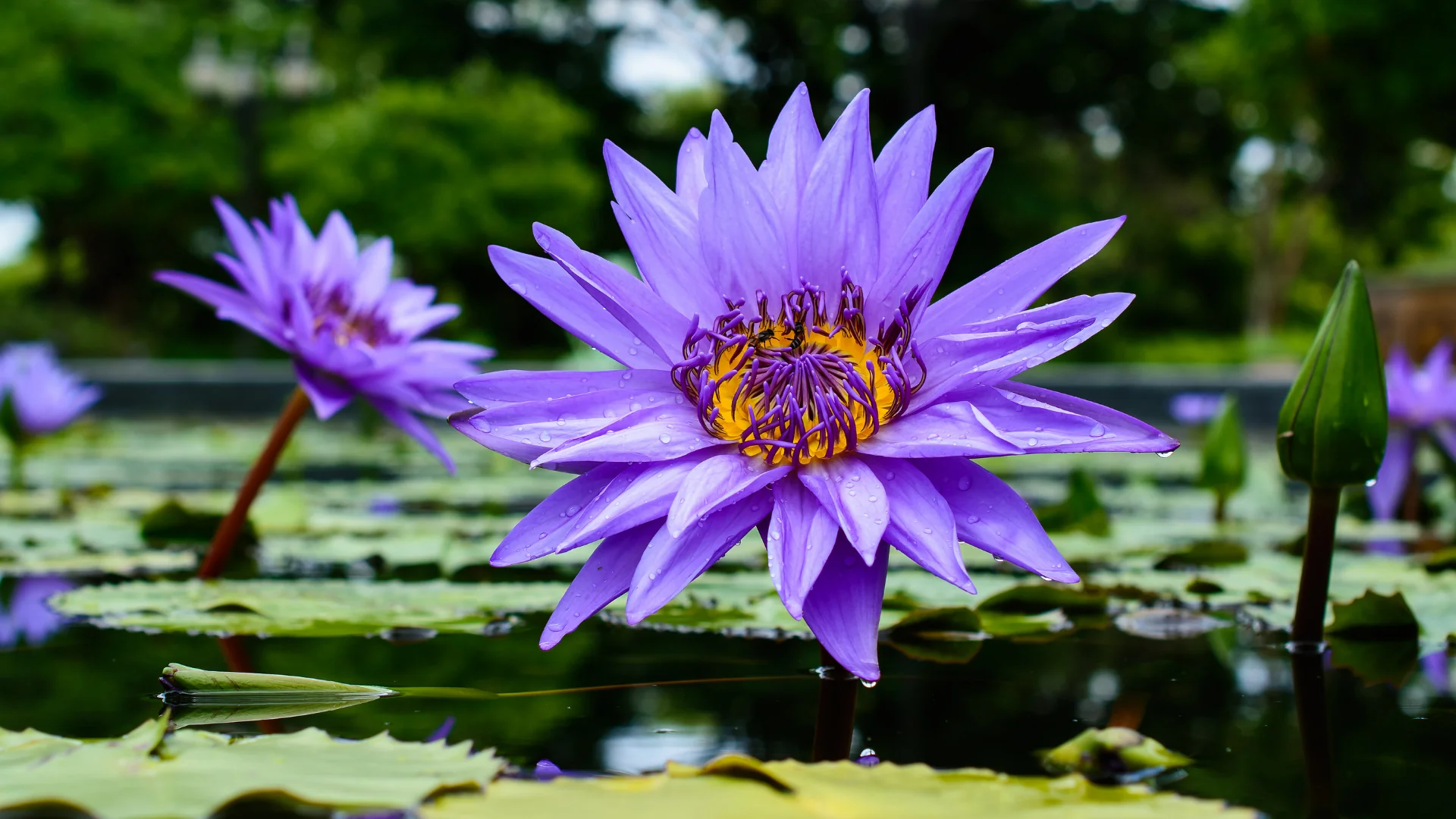
The Blue Lotus, scientifically known as Nymphaea caerulea, is actually a type of water lily rather than a true lotus, and it grows in freshwater environments where its roots remain anchored in mud while its leaves and flowers float gracefully on the water surface, and what makes its biology unique is its ability to open during daylight and partially close at night, reflecting strong synchronization with environmental light cycles, while its petals display soft blue and purple tones surrounding a bright yellow center that attracts pollinators and creates the flower’s iconic mystical appearance.
🌞 Why the Blue Lotus Was Connected With the Sun in Ancient Egypt
In Ancient Egyptian symbolism the Blue Lotus was associated with the sun and rebirth because the flower closed during the night and reopened each morning, visually representing the daily rebirth of the sun god Ra, and this natural opening-and-closing behavior made Egyptians see the flower as a symbol of creation, awakening, and the eternal cycle of life, while Blue Lotus imagery appeared in temples, tombs, paintings, jewelry, and religious ceremonies as a sacred representation of spiritual transformation and divine energy.
🌱 Life Cycle and Growth Pattern of Blue Lotus
The life cycle of Blue Lotus begins with seed germination in shallow freshwater environments where warm temperatures and sunlight support early growth, and as the plant develops it forms underwater stems and floating leaves that maximize sunlight exposure while maintaining stability in aquatic ecosystems, and eventually flower buds emerge above the water surface and bloom into fragrant flowers that attract insects for pollination, while after pollination seeds develop and return to the water, continuing the reproductive cycle in lakes, ponds, and river systems.
🧠 Psychological and Emotional Impact of Blue Lotus
Blue Lotus has long been associated with calmness, meditation, spiritual awareness, and altered emotional states because its fragrance and symbolic imagery create strong psychological effects linked with peace and introspection, and historically extracts of the flower were sometimes infused into drinks and rituals believed to promote relaxation and heightened spiritual experiences, while modern aromatherapy and wellness communities often associate Blue Lotus with mindfulness, dream enhancement, and emotional tranquility due to its gentle floral aroma and historical mystical reputation.
🏺 Mythological and Spiritual Importance of Blue Lotus
The spiritual importance of Blue Lotus extends far beyond Egypt because throughout history it became associated with enlightenment, purity, and transcendence in multiple symbolic traditions, and in Egyptian mythology the flower was believed to emerge from the primordial waters of creation, carrying the sun into existence, while its appearance in sacred art often represented divine awakening and spiritual rebirth, making Blue Lotus one of the most iconic sacred flowers ever used in religious symbolism and mystical philosophy.
🧪 Medicinal and Traditional Uses of Blue Lotus
Historically Blue Lotus was used in herbal preparations and ceremonial drinks because it was believed to possess calming and mildly euphoric properties, and certain compounds within the plant such as aporphine and nuciferine have been studied for their relaxing effects on the nervous system, while modern herbal communities use Blue Lotus in teas, oils, and wellness products aimed at promoting relaxation and meditation, although scientific research on its medical effects is still limited compared to more widely studied medicinal plants.
🐝 Ecological Role of Aquatic Lotus Flowers
Blue Lotus contributes to aquatic ecosystems by providing shelter and shade for fish, insects, and aquatic organisms, while its floating leaves help regulate water temperature and reduce excessive algae growth, and its flowers support pollinators by providing nectar and pollen sources, making the plant ecologically important in maintaining healthy freshwater environments and biodiversity.
🌸 Conclusion
The Blue Lotus is far more than a beautiful aquatic flower because it represents one of the deepest intersections between nature, spirituality, mythology, and human consciousness, combining biological elegance with symbolic meaning that has survived across thousands of years of civilization, and its connection with rebirth, peace, enlightenment, and sacred transformation makes it one of the most emotionally and culturally powerful flowers in human history.
❓ FAQ
1. Is Blue Lotus a real lotus flower?
No, it is technically a water lily called Nymphaea caerulea.
2. Why was Blue Lotus sacred in Ancient Egypt?
Because it symbolized the sun, rebirth, and spiritual awakening.
3. Does Blue Lotus have calming effects?
Traditionally it was used for relaxation and meditation.
4. Where does Blue Lotus grow?
In freshwater ponds, lakes, and slow-moving rivers.
5. What does Blue Lotus symbolize?
It symbolizes enlightenment, rebirth, peace, and divine creation.