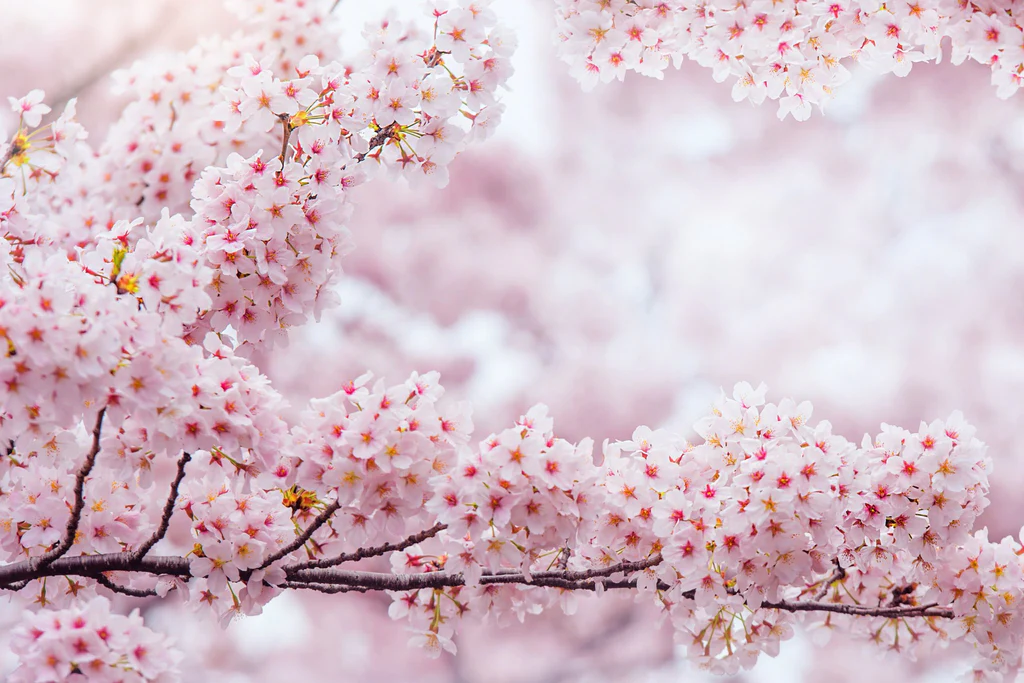
The cherry blossom, commonly known as Sakura in Japan, is one of the most emotionally meaningful and culturally respected flowers in the world because it represents the temporary nature of life, beauty, and human existence, and unlike many flowers that are valued mainly for fragrance or long-lasting blooms, cherry blossoms are admired precisely because they bloom for a very short time before falling, creating a powerful emotional connection between nature and human philosophy, and this combination of delicate beauty, seasonal transformation, and symbolic depth has made cherry blossoms one of the most iconic flowers in global culture and visual art.
🌿 Botanical Structure and Scientific Design of Cherry Blossom Trees
Cherry blossoms belong mainly to species of the genus Prunus, which includes flowering cherry trees cultivated for ornamental purposes rather than fruit production, and these trees are biologically adapted for seasonal flowering where energy stored during winter dormancy is rapidly converted into mass blooming during spring, and the flowers themselves are usually small with five delicate petals arranged symmetrically around reproductive organs that attract pollinators such as bees, while the tree’s branching structure allows large clusters of blossoms to bloom simultaneously, creating the dramatic visual effect associated with Sakura season.
🌸 Why Cherry Blossoms Bloom for Such a Short Time
One of the most unique aspects of cherry blossoms is their extremely short blooming period, which usually lasts only one to two weeks depending on weather conditions, and scientifically this short lifespan is related to the flower’s reproductive strategy because the blossoms are designed to attract pollinators quickly during early spring when competition from other flowering plants is still limited, and environmental factors such as rain, temperature changes, and wind can cause petals to fall rapidly, making cherry blossoms highly sensitive to seasonal climate variations and reinforcing their symbolic association with impermanence.
🌱 Life Cycle and Seasonal Growth of Cherry Blossom Trees
The life cycle of cherry blossom trees follows a strong seasonal rhythm where the trees remain dormant during winter to conserve energy, and as temperatures rise in early spring hormonal changes trigger bud swelling and rapid flower development, and before leaves fully emerge the tree enters its blooming phase, maximizing flower visibility and pollinator access, and after pollination the blossoms fall while leaves grow throughout summer to support photosynthesis and nutrient storage for the next cycle, showing how cherry blossoms are deeply synchronized with seasonal environmental patterns.
🧠 Psychological and Emotional Impact of Cherry Blossoms
Cherry blossoms have a profound psychological effect because their brief beauty creates feelings of nostalgia, appreciation, peace, and emotional reflection, and in environmental psychology soft pink and white tones are associated with calmness and emotional sensitivity, while the falling petals create a visual reminder of the temporary nature of life, making cherry blossoms emotionally powerful symbols that encourage mindfulness and appreciation of the present moment, which is one of the reasons Sakura festivals attract millions of people every year.
🇯🇵 Japanese Philosophy and Cultural Importance of Sakura
In Japanese culture cherry blossoms are deeply connected with the philosophy of “mono no aware,” which refers to an awareness of impermanence and the bittersweet beauty of temporary things, and Sakura season is celebrated through Hanami gatherings where people sit beneath blooming trees to appreciate nature, friendship, and life itself, while historically cherry blossoms were also associated with samurai culture because their short-lived beauty symbolized a life lived with honor and acceptance of mortality, making Sakura not just a flower but a national cultural symbol deeply embedded in Japanese identity and philosophy.
🌍 Global Symbolism and Modern Influence of Cherry Blossoms
Although strongly associated with Japan, cherry blossoms are now celebrated worldwide as symbols of peace, renewal, hope, and beauty, and many countries host Sakura festivals inspired by Japanese traditions, while cherry blossom imagery is widely used in art, fashion, photography, tourism branding, and social media aesthetics due to its soft and emotionally calming appearance, making it one of the most internationally recognized floral symbols in modern culture.
🐝 Ecological Role of Cherry Blossoms
Cherry blossoms support ecosystems by providing nectar and pollen sources for early spring pollinators such as bees and insects, and because they bloom before many other trees, they play an important role in supporting pollinator populations after winter, while their trees also contribute to urban biodiversity, shade production, and environmental aesthetics in parks and public landscapes.
🌸 Conclusion
Cherry blossoms are far more than decorative spring flowers because they represent one of the deepest connections between nature and human emotion, combining biological precision, seasonal transformation, cultural philosophy, and emotional symbolism into a single natural phenomenon, and their short-lived beauty teaches lessons about impermanence, appreciation, and emotional awareness, making Sakura one of the most meaningful flowers in human civilization.