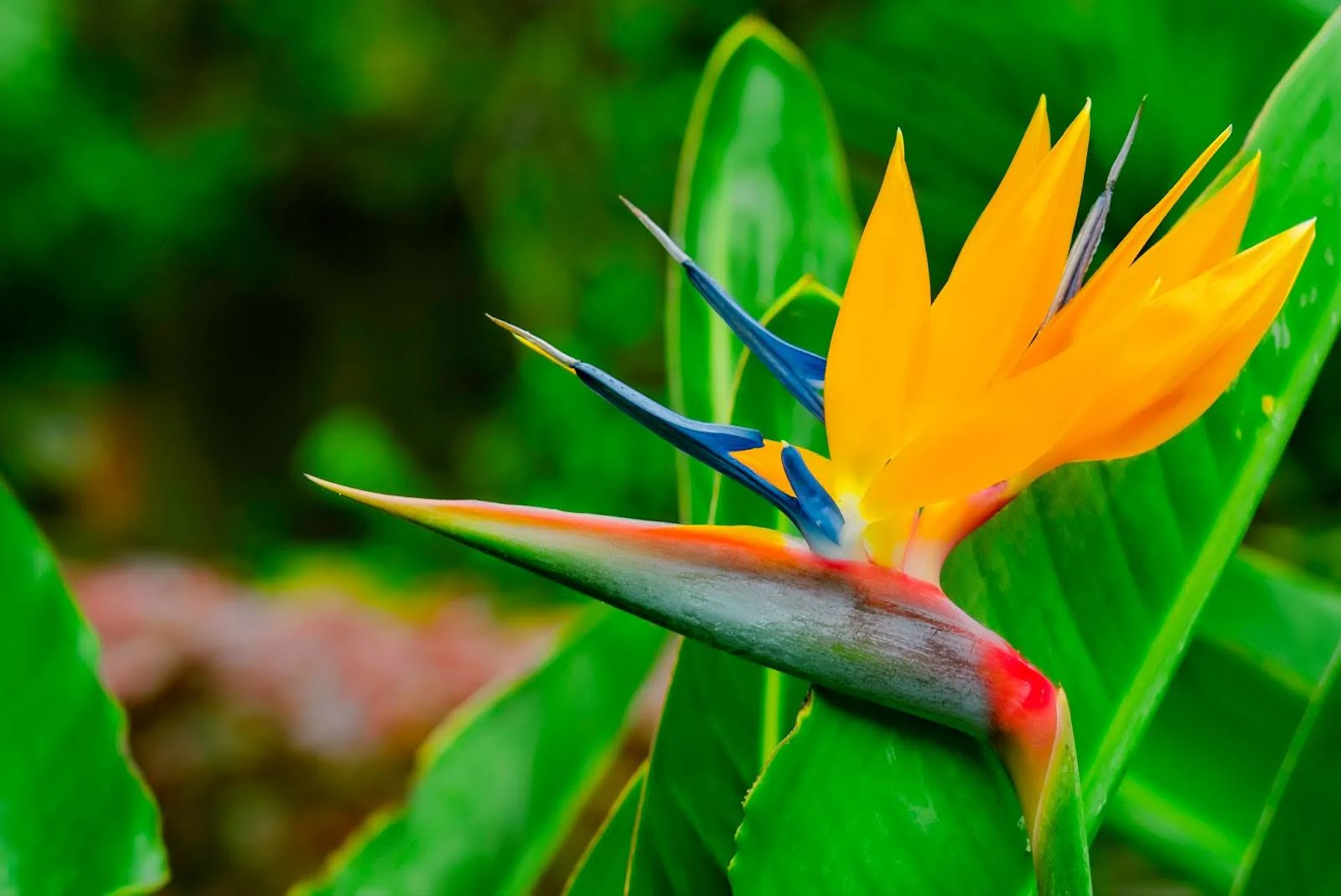
The Bird of Paradise flower is one of the most visually extraordinary and evolutionarily specialized flowers in the world because its structure resembles the head and feathers of a tropical bird in flight, creating one of the most dramatic examples of natural design in the plant kingdom, and unlike soft, symmetrical flowers that rely mainly on fragrance or delicate beauty, the Bird of Paradise evolved as a bold architectural flower with strong colors, rigid structures, and mechanical pollination systems that make it both biologically advanced and visually unforgettable, turning it into a global symbol of tropical luxury, freedom, and exotic beauty.
🌿 Botanical Structure and Scientific Design of Bird of Paradise
The Bird of Paradise belongs to the genus Strelitzia, and it is a tropical perennial plant native to South Africa, where it evolved in warm climates with intense sunlight and seasonal rainfall, and what makes its botanical structure scientifically unique is its rigid horizontal bract, bright orange and blue petals, and strong stem system designed to support heavy pollinators, while its large banana-like leaves maximize sunlight absorption and water efficiency, making the plant highly adapted for tropical ecosystems where competition for pollinators and sunlight is intense.
🌸 Why the Flower Looks Like a Bird
The flower’s bird-like appearance is the result of evolutionary adaptation rather than coincidence because the shape developed specifically to attract certain pollinators, especially sunbirds in its native habitat, and the pointed blue petals resemble a bird’s crest while the orange sepals mimic feathers, creating a strong visual signal that stands out in dense vegetation, and scientifically this specialized structure also supports mechanical pollination where birds land on the flower and trigger pollen transfer through pressure-sensitive floral parts, making Bird of Paradise one of the most sophisticated pollination systems among ornamental flowers.
🌱 Life Cycle and Growth Pattern of Bird of Paradise Plant
The life cycle of Bird of Paradise begins through seeds or root division, although mature plants are often propagated through division for faster flowering consistency, and once planted the plant develops strong underground rhizomes that store nutrients and support long-term growth, while above ground thick stems and large leaves emerge gradually over several years before flowering begins, and mature plants repeatedly produce striking blooms during favorable seasons, making Bird of Paradise a long-living ornamental plant with slow but highly rewarding growth patterns.
🧠 Psychological and Emotional Impact of Bird of Paradise
Bird of Paradise flowers create strong emotional responses because their unusual shape and vibrant tropical colors stimulate curiosity, excitement, and feelings of freedom and adventure, and in color psychology orange represents energy and creativity while blue symbolizes calmness and imagination, making the flower psychologically associated with optimism, luxury travel, tropical relaxation, and artistic expression, which is why it is commonly used in luxury resorts, modern architecture, and exotic floral arrangements designed to create visual impact.
🌍 Cultural and Symbolic Importance of Bird of Paradise
Bird of Paradise symbolizes freedom, paradise, uniqueness, and joy in many cultures because of its exotic appearance and tropical origins, while in modern symbolism it is often associated with success, confidence, and reaching beyond limitations, and due to its rare and dramatic beauty the flower has become a luxury design element in high-end hotels, weddings, tropical gardens, and modern art, representing boldness and individuality in decorative culture.
🧪 Commercial and Decorative Importance of Bird of Paradise
Bird of Paradise has major commercial value in landscaping and floral industries because its flowers last a long time after cutting, making them highly valuable for luxury bouquets and decorative arrangements, while the plant itself is widely used in tropical landscaping projects due to its architectural appearance and strong visual presence, and because of its association with exotic luxury it is also heavily used in branding, tourism marketing, and interior design aesthetics.
🐝 Ecological Role and Pollination System
The ecological importance of Bird of Paradise lies mainly in its specialized relationship with bird pollinators, especially nectar-feeding species that help transfer pollen between flowers, while its large leaves also contribute to local ecosystems by providing shade and moisture retention in tropical environments, and its strong root systems help stabilize soil in landscaped areas.
🌺 Conclusion
The Bird of Paradise flower is one of nature’s most spectacular examples of evolutionary creativity because it combines engineering-like biological structures, tropical adaptation, mechanical pollination systems, and dramatic visual aesthetics into a single plant form, and its ability to symbolize freedom, luxury, and exotic beauty while supporting specialized ecological relationships makes it one of the most iconic tropical flowers in the world.
❓ FAQ
1. Why is it called Bird of Paradise?
Because its flower resembles a colorful tropical bird in flight.
2. Where does Bird of Paradise naturally grow?
It is native to South Africa and tropical climates.
3. What does Bird of Paradise symbolize?
It symbolizes freedom, paradise, luxury, and uniqueness.
4. Is Bird of Paradise difficult to grow?
It requires warmth, sunlight, and patience but is relatively durable.
5. How does Bird of Paradise get pollinated?
Through specialized bird pollination systems involving pressure-triggered pollen transfer.