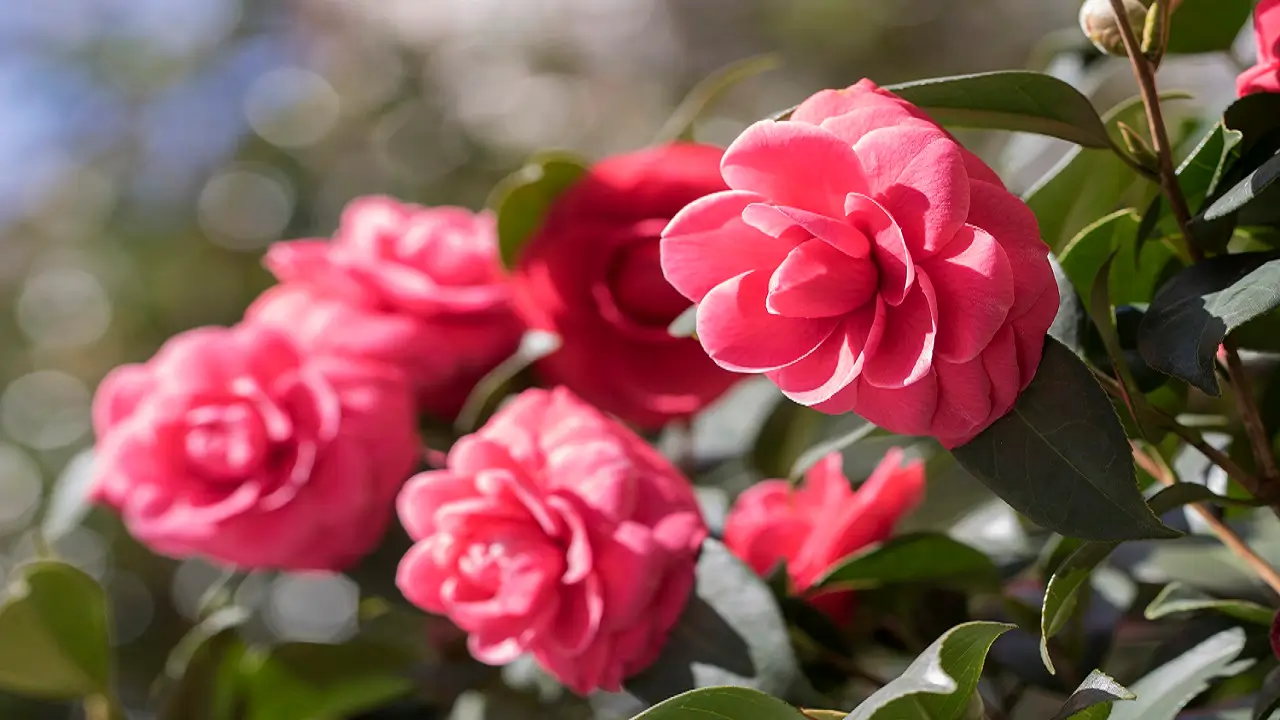
The camellia flower is one of the most elegant and scientifically valuable flowering plants in the world because it combines ornamental beauty with major economic importance through its close relationship to the tea plant, and unlike many decorative flowers that exist mainly for visual appeal, camellias belong to a plant family that has shaped global culture, trade, agriculture, and human lifestyle for centuries, making them not only symbols of luxury and refinement but also botanically connected to one of the most consumed beverages on Earth: tea.
🌿 Botanical Structure and Scientific Design of Camellia
Camellias belong to the genus Camellia, which includes more than 200 species of evergreen shrubs and small trees, and what makes them biologically interesting is their glossy dark green leaves, thick waxy petals, and highly structured flowers that bloom during cooler seasons when many other plants remain dormant, and this seasonal blooming strategy allows camellias to attract pollinators during periods of reduced floral competition, while their evergreen foliage ensures year-round photosynthesis and energy storage, making them highly efficient perennial plants adapted for long-term survival.
🍃 The Tea Plant Connection: Camellia sinensis
One of the most important facts about camellias is that the tea plant itself, Camellia sinensis, belongs to the same genus, and nearly all traditional teas including green tea, black tea, white tea, and oolong tea are produced from this species, while differences in flavor and color come mainly from processing methods rather than different plants, and this makes camellias unique because they bridge the gap between ornamental horticulture and global agriculture, connecting luxury flowers with one of the largest beverage industries in human history.
🌸 Why Camellias Look So Smooth and Perfect
The refined appearance of camellias comes from their highly symmetrical petal arrangement and thick wax-like texture, which allows the petals to maintain smooth surfaces and structural integrity even during cold or wet conditions, and scientifically this durability is supported by strong cellular structures and protective surface layers that reduce water damage and environmental stress, making camellia flowers appear almost artificially perfect in shape and texture, which is one of the reasons they are associated with sophistication and luxury.
🌱 Life Cycle and Growth Pattern of Camellia Plants
The life cycle of camellias begins through seeds, cuttings, or grafting methods, and once established the plant develops slowly but steadily, producing evergreen foliage and woody stems that can survive for decades, and depending on the species, camellias bloom during autumn, winter, or early spring, providing color during seasons when most gardens appear inactive, while after flowering the plant produces seed capsules that support reproduction and genetic diversity, making camellias long-living ornamental shrubs with stable seasonal cycles.
🧠 Psychological and Emotional Impact of Camellias
Camellias create feelings of calmness, elegance, and emotional balance because their smooth petals, balanced symmetry, and rich colors produce a visually soothing effect, and in psychological interpretation white camellias symbolize purity and peace, pink camellias represent admiration and gentle affection, and red camellias symbolize deep love and passion, making them emotionally expressive flowers often used in refined decorative settings and luxury floral arrangements.
🌍 Cultural and Historical Importance of Camellias
Camellias hold strong cultural importance in East Asia, especially in China and Japan, where they have been cultivated for centuries in gardens, temples, and artistic traditions, and in Japanese culture camellias symbolize respect, elegance, and spiritual calmness, while in European history they became associated with aristocracy and luxury during the 18th and 19th centuries, especially after becoming fashionable among elite garden collectors, and today camellias continue to represent sophistication and timeless beauty in global floral culture.
🧪 Medicinal and Commercial Importance of Camellias
Beyond tea production, camellias also have commercial value in skincare, cosmetics, and wellness industries because camellia seed oil contains antioxidants, fatty acids, and moisturizing compounds beneficial for skin and hair health, while tea extracts from Camellia sinensis are widely researched for their potential effects on metabolism, heart health, and cognitive function, making camellias economically important far beyond ornamental gardening.
🐝 Ecological Role of Camellia Plants
Camellias contribute to ecosystems by providing nectar and pollen sources during colder seasons when pollinator food sources are limited, and their evergreen foliage offers shelter for birds and insects throughout the year, while their long lifespan helps stabilize soil and maintain biodiversity in cultivated landscapes and natural forest environments.
🌺 Conclusion
The camellia flower is one of the most refined and multifunctional plants in the natural world because it combines ornamental elegance, agricultural importance, ecological contribution, and cultural symbolism into a single botanical system, and its connection to the global tea industry along with its luxurious flowers makes camellia a unique bridge between beauty, science, commerce, and human tradition.
❓ FAQ
1. Is the tea plant related to camellias?
Yes, traditional tea comes from Camellia sinensis.
2. Why are camellias considered luxury flowers?
Because of their perfect symmetry, glossy petals, and cultural prestige.
3. What do camellias symbolize?
They symbolize elegance, love, peace, and refinement.
4. Are camellias difficult to grow?
They require patience but thrive well in suitable climates.
5. What is camellia oil used for?
It is used in skincare, cosmetics, and hair treatments.