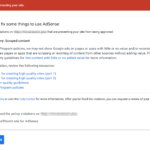
I’ve applied for AdSense on four different sites now, at different points, in different conditions. The review times were wildly different — one took 23 days, one took 6, one took 9, and one got rejected outright after about a week.
For a while I assumed the review time was basically random, just however long it took someone (or something) at Google to get around to my application. But once I laid all four attempts side by side and compared what I’d actually done differently before applying each time, a pretty clear pattern showed up. The fast ones had specific things in common. The slow one didn’t.
This isn’t a guarantee — I want to be upfront that I don’t work at Google and can’t promise a specific number of days for anyone else’s site. But here’s what actually seemed to matter across my own attempts, and what I’d focus on if speed is the goal.
My Four Attempts, Side by Side
Before getting into the “why,” here’s what each attempt actually looked like, since the comparison is what taught me anything useful in the first place.
Attempt 1 — Rejected after about a week. New site, 6 posts, all under 400 words, no About/Contact/Privacy Policy pages, applied the same day I finished building it.
Attempt 2 — Approved in 23 days. Different site, better content (8 posts, more thorough), had the basic pages this time, but I applied almost immediately after publishing, without submitting anything to Search Console first.
Attempt 3 — Approved in 9 days. Same general approach as attempt 2, but this time I submitted my sitemap through Google Search Console and waited about two weeks before applying, giving the site time to actually get indexed.
Attempt 4 — Approved in 6 days. A newer site, similar content quality to attempt 3, but I also made sure the site was mobile-friendly and fast-loading beforehand, checked with Google PageSpeed Insights, and had a small amount of organic search traffic (not just direct visits) by the time I applied.
Laid out like that, the pattern’s pretty visible. The slower approvals had solid content but skipped something structural. The faster ones had the content and the structural stuff sorted before applying.
What Seemed to Actually Speed Things Up
Getting indexed before applying, not after
This is probably the single biggest difference between my 23-day approval and my 9-day one. For attempt 2, I applied the same week I published, before Google had really had a chance to crawl and index the site properly. For attempt 3, I submitted my sitemap through Search Console and gave it roughly two weeks before applying.
I think applying to a site that’s already indexed just gives the reviewer (human or automated) something concrete to actually evaluate, instead of a site that barely exists yet from Google’s perspective.
Having actual organic traffic, even a small amount
By attempt 4, my site had picked up a small trickle of organic search traffic before I applied — nothing dramatic, maybe 50-70 visits over a couple weeks, but real people finding real pages through actual search queries, not just me checking my own site repeatedly.
I don’t know for certain this shaved days off the review, but it’s the one meaningful difference between attempt 3 and attempt 4, and attempt 4 was the fastest of the four.
Fixing technical basics upfront
Attempt 4 was also the first time I checked mobile responsiveness and page speed before applying, rather than after. I ran the site through Google PageSpeed Insights, found a couple of oversized images, and compressed them using TinyPNG. I also actually opened the site on my phone, not just a resized browser window, and caught a small layout issue in the footer.
None of this took more than an hour combined, and it’s genuinely the cheapest, easiest category of fix on this entire list.
Having the standard pages complete, not just present
By attempt 2 onward, I had About, Contact, and Privacy Policy pages, but on attempt 2 they were pretty thin — a couple of generic sentences each. By attempt 3 and 4, I’d rewritten them properly: a real About page that explained who I was and why the site existed, a working Contact form I’d actually tested myself, and a Privacy Policy I’d generated through PrivacyPolicies.com and then edited so it wasn’t just generic filler text.
I can’t say for sure this affected review speed specifically, but it’s one more thing that was more “complete” in the faster approvals.
Step-by-Step: What I’d Do If Aiming for Under 10 Days
Based on comparing all four attempts, here’s the order I’d actually prioritize if speed matters to you specifically:
- Write 7-8 genuinely thorough articles first, 800+ words each, before thinking about applying at all.
- Add complete About, Contact, and Privacy Policy pages, not placeholder versions.
- Check mobile layout and site speed before applying, using an actual phone and Google PageSpeed Insights.
- Submit your sitemap through Google Search Console as soon as your content is ready.
- Wait at least two weeks after submitting, letting the site get indexed and pick up whatever small amount of organic traffic it naturally attracts.
- Apply once there’s some indication of organic search traffic, even a small amount, rather than applying to a site with zero search visibility yet.
A Small But Telling Detail
One thing I noticed comparing attempt 3 and attempt 4: on attempt 4, when I checked Search Console right before applying, several of my pages were already showing impressions in the Performance report, meaning they were appearing in actual search results, even if nobody had clicked yet. On attempt 3, only about half my pages had reached that point when I applied.
I don’t think this alone explains the three-day difference between the two, but it lines up with the general idea that a site with more visible search presence tends to move faster through review.
Common Mistakes That Slow the Review Down
- Applying immediately after publishing, before Google’s had any real chance to index the site.
- Skipping Search Console entirely, leaving indexing to happen passively and slowly on its own.
- Leaving About/Contact/Privacy Policy pages thin or generic, even if they technically exist.
- Never checking mobile layout, which can create an impression of an unfinished site.
- Ignoring page speed, especially oversized, uncompressed images.
- Applying with zero organic traffic, relying entirely on direct visits or shared links.
Final Thoughts
I don’t think there’s a guaranteed formula that locks in a specific number of days — plenty of factors are probably outside anyone’s control. But comparing my own four attempts honestly, the faster approvals weren’t accidents. They came from doing the indexing and technical basics properly before applying, not just having decent content and hoping for the best.
If you’re aiming for a fast turnaround, the biggest lever seems to be making sure Google’s actually had a real chance to see and index your site before you even hit apply, rather than anything you can do after the fact.