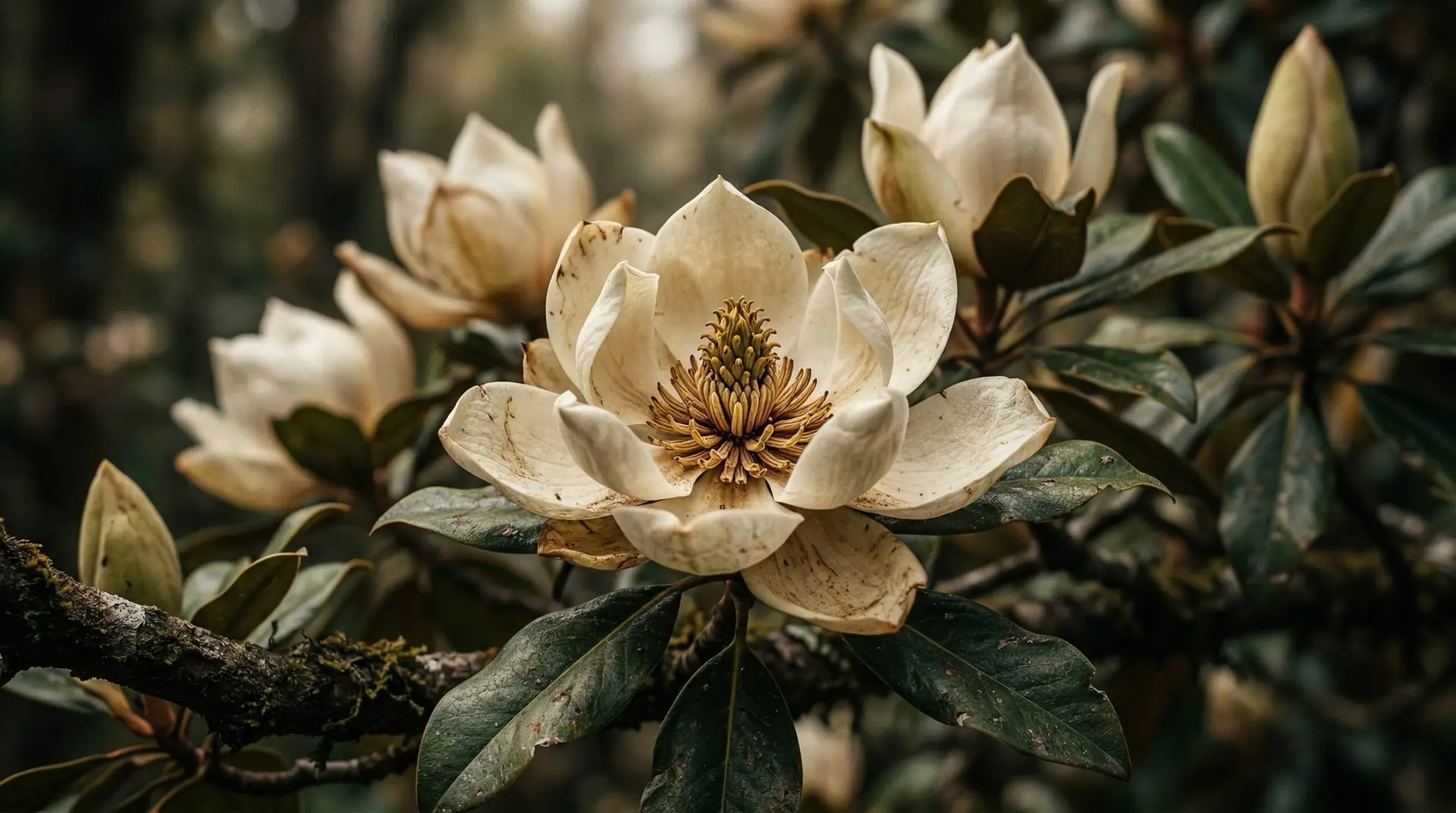
The magnolia flower is one of the oldest and most evolutionarily significant flowering plants on Earth because it existed long before bees evolved as pollinators, making it a living connection to prehistoric botanical history, and unlike many modern flowers that developed complex structures specifically for bee pollination, magnolias evolved during a time when beetles were among the primary pollinators, which is why their flowers have thick, durable petals and strong structures capable of withstanding heavy insect movement, making magnolias not only beautiful ornamental trees but also important scientific examples of early flowering plant evolution.
🌿 Botanical Structure and Ancient Biological Design of Magnolia
Magnolias belong to the genus Magnolia, which contains both evergreen and deciduous species, and what makes their botanical structure unique is their primitive flower design where petals and sepals are not clearly separated but arranged in spiral formations around a central cone-like reproductive structure, and unlike modern flowers with highly specialized pollination systems, magnolias maintain a simpler but highly durable structure that reflects their ancient evolutionary origins, while their large glossy leaves maximize sunlight absorption and support the tree’s long lifespan and seasonal flowering cycles.
🌸 Why Magnolias Are Considered Ancient Flowers
Magnolias are considered ancient flowers because fossil evidence suggests that magnolia-like plants existed more than 90 million years ago, long before bees became dominant pollinators, and during that prehistoric period beetles were the main pollinating insects, which influenced the evolution of magnolia flowers to become thick, strong, and resistant to damage, and this evolutionary history makes magnolias extremely important in botanical science because they provide insight into how the earliest flowering plants developed and adapted before modern pollination systems evolved.
🌱 Life Cycle and Seasonal Growth of Magnolia Trees
The life cycle of magnolia begins with seed germination or vegetative propagation through grafting and cuttings, and once established the tree develops slowly but steadily, producing strong roots, thick branches, and dense foliage over many years, and during spring or early summer magnolias produce large fragrant flowers before or alongside leaf growth depending on the species, and after flowering the plant develops seed cones containing bright red seeds that attract birds and help natural seed dispersal, while the tree itself can live for decades or even centuries under suitable environmental conditions.
🧠 Psychological and Emotional Impact of Magnolia Flowers
Magnolia flowers create a strong emotional effect because their large blooms, soft colors, and elegant symmetry are associated with peace, dignity, luxury, and emotional stability, and in environmental psychology soft white and pink tones often produce calming and comforting feelings, while the sheer size and structure of magnolia blooms create a sense of grandeur and natural sophistication, making them popular in luxury gardens, resorts, and peaceful outdoor spaces designed for relaxation and visual harmony.
🌍 Cultural and Historical Importance of Magnolia
Magnolias hold cultural significance in many regions of the world, especially in East Asia and the southern United States, where they symbolize dignity, beauty, perseverance, and nobility, and in Chinese culture magnolias have historically represented feminine beauty and purity, while in American culture the Southern Magnolia became a symbol of hospitality, grace, and regional identity, and throughout history magnolias have been planted in royal gardens, temples, and elite landscapes because of their timeless and luxurious appearance.
🧪 Medicinal and Practical Uses of Magnolia
Certain magnolia species have been used in traditional medicine systems, particularly in Chinese herbal medicine where bark extracts are believed to support stress reduction, digestion, and respiratory health, while modern scientific research has identified compounds such as magnolol and honokiol that may possess anti-inflammatory and antioxidant properties, and beyond medicine magnolias are also highly valuable in ornamental landscaping due to their strong aesthetic appeal and long lifespan.
🐝 Ecological Role and Environmental Importance
Magnolia trees contribute to ecosystems by providing shelter, shade, and food sources for birds and insects, while their flowers support pollinators including beetles and bees, and their large canopies help improve air quality, regulate urban temperatures, and support biodiversity in landscaped environments, making magnolias ecologically beneficial as well as visually attractive.
🌼 Conclusion
The magnolia flower is one of the most extraordinary examples of ancient botanical evolution still existing in the modern world because it combines prehistoric biological design, ecological importance, emotional beauty, and cultural elegance into a single living tree, and its survival across millions of years demonstrates the strength of natural adaptation while its luxurious flowers continue to inspire humans through landscaping, symbolism, and emotional connection with nature.
❓ FAQ
1. Why are magnolias called ancient flowers?
Because they evolved before bees and are among the oldest flowering plants.
2. What pollinated magnolias before bees existed?
Mainly beetles, which influenced their strong flower structure.
3. What do magnolias symbolize?
They symbolize dignity, beauty, purity, and perseverance.
4. Are magnolias useful medicinally?
Some species are used in traditional herbal medicine.
5. Why are magnolias popular in luxury landscaping?
Because of their large elegant flowers and long-lasting trees.